

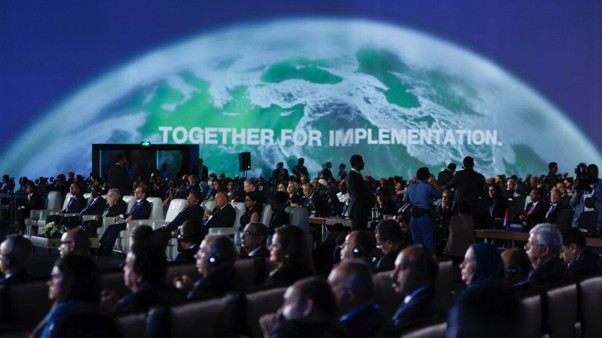
With COP31 on the horizon, this article examines the conference’s likely focus and what it may mean for Northern Ireland.
What is the Conference of the Parties?
The Conference of the Parties (COP) is the supreme decision-making body of the United Nations Framework Convention on Climate Change (UNFCCC). The Conference brings together the 198 Parties: 197 nations and the European Union (EU). Each year, the COP reviews progress on implementing the Climate Change Convention and related legal instruments. It also provides a forum for Parties to assess progress, negotiate agreements and coordinate further action on climate change.
Notable COPs include COP3, hosted in Kyoto in 1997, which resulted in the Kyoto Protocol. This established legally binding emission-reduction targets, which committed industrialised economies to reduce greenhouse gas emissions in accordance with individual targets. Although 192 countries were party to the Kyoto Protocol, its legally binding targets only applied to 37 industrialised countries and EU members. The Kyoto Protocol operated until 2020 and has since been superseded by the Paris Agreement.
COP21, held in Paris in 2015, resulted in the Paris Agreement, which remains the most comprehensive international climate agreement to date. Its central aim is to limit the increase in global average temperatures to well below 2°C above pre-industrial levels, while pursuing efforts to limit the increase to 1.5°C. However, while the Paris Agreement is legally binding, it is not punitive. The Paris Agreement Implementation and Compliance Committee (PAICC) ensures compliance is achieved through facilitation, transparency and review.
At COP29 in Baku, Azerbaijan, in 2024, the Conference of the Parties agreed to increase climate finance for developing countries to at least $300 billion per year by 2035. This builds on the previous commitment of $100 billion per year, which was agreed in Dubai at COP28. This climate finance deal has been dubbed the ‘Loss and Damage Fund’ and is intended to support climate action and adaptation in Less Economically Developed Countries (LEDC). These nations are often among the most affected by climate change despite having contributed least to historical emissions.
When and where is COP31?
The 31st Conference of the Parties will take place from the 9th to 20th November 2026 in Antalya, Türkiye. The COP31 Presidency has been entrusted to Murat Kurum, Turkish Minister of Environment, Urbanisation and Climate Change, by the COP presidential circular.
Why is COP important?
The Conference of the Parties is vital as it provides the principal international forum for governments to negotiate climate commitments, assess progress and agree on collective action. Its decisions influence national climate policies, international finance and efforts to reduce greenhouse gas emissions and adapt to climate change.
Already, the effects of climate change are being felt across the world. Recent, unprecedented disasters have exposed gaps in preparedness and shown why local communities must plan for a changing climate. In Europe in 2026, Spain experienced its most destructive wildfire season on record, an early-May heatwave that brought temperatures as high as 40.3°C in Mora, Portugal, and 40 consecutive days of rain across Devon, Cornwall and Worcestershire.
In Northern Ireland, we are experiencing more extreme weather events more frequently, with 4 heatwaves occurring in Summer 2026. As well as this, once-in-a-hundred-year storms are becoming more frequent, with Storm Éowyn in 2025 posing a ‘danger to life’.
UK Government at COP:
Currently, the United Kingdom has committed to reducing emissions of greenhouse gases to net-zero by 2050. In 2023, the UK pledged £60 million to the Loss and Damages Fund. However, it has not increased this contribution since the fund’s overall target was raised.
When the UK hosted COP26 in Glasgow in 2021, it focused on issues including emissions reductions, adaptation, climate finance and collaboration between governments, businesses and civil society.
Irish Government at COP:
The Irish Government has committed to reaching net-zero emissions by 2050, in line with the wider European Union target. At COP28, Ireland pledged €25 million to the Loss and Damage Fund for the years 2024 and 2025. Therefore, this commitment is up for renewal this year at COP31.
At previous Conferences of the Parties, the Irish Government has sent TD Darragh O’Brien, Minister for Climate, Energy and the Environment, as its representative to participate in negotiations and discussions.
What to keep an eye on at COP?
Türkiye, this year’s host, has stated the Conference aims “to turn the commitments made at previous sessions into concrete implementation”. In particular, the COP31 President Murat Kumar has said that COP31 “will address in detail how [the transition away from fossil fuels] will be implemented and the concrete roadmaps for countries’ energy transitions”.
This fossil fuel transition was agreed in principle at COP28; however, as of COP30, no formal agreement on implementation was reached. COP30 did produce the Belém Declaration on a Just Transition Away from Fossil Fuels. To date, 44 entities have endorsed the declaration, including the UK and the European Union.
COP31 will also include a dedicated session on the climate finance needs of Small Island Developing States. The session is intended to act as a platform for pledges to the Pacific Resilience Facility, which helps vulnerable Pacific people exposed to climate change and disaster risks.
What does this mean for Northern Ireland:
The Northern Ireland Climate Change Act 2022 establishes several statutory climate targets and requirements, including:
– 100% reduction in net zero greenhouse gas (GHG) emissions by 2050
– 48% reduction in net emissions by 2030
– 2030 target of at least 80% of electricity consumption from renewable sources
While the climate negotiations at COP will not directly alter these legal obligations, they may still influence discussions on accelerating emission reductions, climate finance, adaptation, and the implementation of national climate plans. This may shape future policy approaches across the UK and Ireland, including energy system decarbonisation, agriculture, transport, and nature restoration. The new roadmaps may lead to a greater focus on how Northern Ireland contributes to meeting national and international climate commitments. For Northern Ireland, this could reinforce the importance of delivering ambitious Climate Action Plans, expanding renewable energy infrastructure, and supporting innovation in sectors that face significant decarbonisation challenges, especially agriculture.
Just Transition has become a prominent theme at recent conferences and is likely to remain central at COP31. This is notable as Northern Ireland is in the process of appointing a Just Transition Commission. The Commission is expected to advise on how emissions reduction can be achieved while protecting workers, communities and businesses that may be affected, to ensure a just transition to a low-carbon economy.
COP31 presents Northern Ireland with an opportunity to learn lessons from the international discussions at the conference regarding balancing climate ambition with economic and social considerations. Additionally, the conference provides momentum to enact climate action and resilience regarding some of the key threats Northern Ireland faces, including extreme weather, flooding and biodiversity loss.