



Waiting lists are a familiar feature of health system debate in Northern Ireland. They are usually discussed in terms of numbers waiting and length of delay. These measures matter, but they are incomplete. Waiting lists can help manage demand and prioritise care, and are not inherently problematic where waits are clinically appropriate. However, when waits become prolonged, these metrics show how long people wait, but reveal much less about what waiting does to patients and to the system.
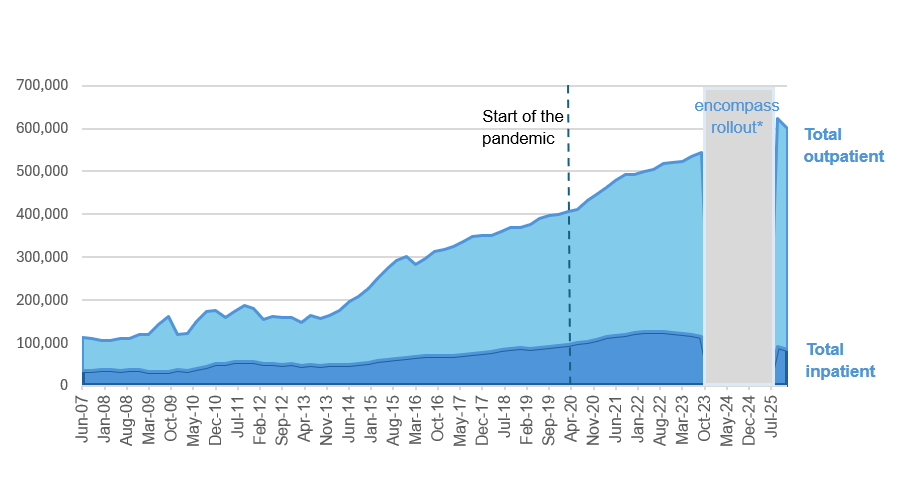
Northern Ireland’s exceptionally long waits are not simply passive queues to be cleared. In practice, waiting can become an active phase of care in its own right, during which health deteriorates, costs shift across the system, and existing inequalities deepen. As of December 2025, around 527,000 people were waiting for a first outpatient appointment, over 87,000 for inpatient or day case treatment, and approximately 221,000 for diagnostic tests. No Health and Social Care Trust was meeting the established waiting time targets across these services.
This matters because waiting lists in Northern Ireland are no longer exceptional or short-term. They have become a structural feature of access to care. Understanding their wider effects is therefore not simply about operational performance, but about how the health and social care system functions overall, who bears the burden of delay, and whether current approaches are sufficiently capturing and responding to these wider impacts. This blog article focuses on these system-level questions, while recognising the very real human impact experienced by those waiting for care.
Northern Ireland: An outlier shaped by long-term pressures
Across neighbouring jurisdictions, waiting times for elective (planned, non-emergency) care increased during and after the COVID-19 pandemic. Workforce shortages, demographic pressures and post-pandemic recovery challenges have affected all systems. Northern Ireland, however, stands apart in both the scale and persistence of these pressures.
Patients in Northern Ireland wait substantially longer for outpatient appointments, diagnostics and elective treatment than patients elsewhere in the UK or the Republic of Ireland. Very long waits measured in years rather than months have become a structural feature of access.
Importantly, this divergence predates COVID‑19. Long waits were already deeply embedded throughout the 2010s, reflecting constrained capacity, funding pressure, workforce shortages, infrastructure limitations and periods of political instability. These pressures were further amplified by COVID-19. Underlying many of these challenges is a workforce constraint, which remains central to both the scale of waiting lists and the pace at which they can be reduced.
By the early 2020s, waiting was no longer affecting a relatively small group of patients. At points, audit evidence suggested that almost a quarter of the Northern Ireland population was on a hospital waiting list at some stage of care. At that scale, waiting cannot realistically be considered clinically, socially or economically neutral.
Waiting is not a pause button
Waiting lists are often understood as deferred care, assuming treatment delivered later is broadly comparable to treatment delivered sooner. Evidence suggests this is not always the case.
For many conditions, time matters: symptoms may worsen, pain may become chronic, mobility may decline, and mental health may be affected. Conditions that might initially have required relatively straightforward treatment can become more complex, with implications for recovery and resource use.
This matters because complexity drives cost. UK evidence suggests that patients waiting longer use more healthcare while they wait, with pressure often spilling over into other parts of the system. Primary care may see increased demand as patients are reviewed while awaiting treatment. Emergency departments can face additional demand when symptoms worsen or pain escalates. Mental health services and social care may also become involved as mobility, independence or wellbeing decline over time.
These effects are rarely captured in waiting list statistics, yet they represent real demand on already stretched services. Constrained elective activity does not necessarily remove cost from the system, often, it redistributes it shifting pressure across interconnected parts of the health and care system.
Waiting and inequality: Unequal capacity to absorb delay
Waiting does not affect everyone equally. The ability to absorb prolonged delay, physically, financially and psychologically, is unevenly distributed across the population.
People living in more deprived areas are more likely to experience poorer baseline health and multiple long-term conditions, making deterioration during long waits potentially more significant. The impacts can extend beyond healthcare, contributing to reduced income, caring pressures and lower quality of life.
At a broader level, prolonged ill‑health can reduce labour market participation, place additional strain on household and the wider economy. Waiting lists are therefore not only a healthcare issue, but also a productivity and social welfare concern.
Financial buffers matter too. Across the UK, including Northern Ireland, use of self‑funded private care has increased, particularly for diagnostics and outpatient assessment. Some patients are able to pay to move more quickly through parts of the system, while others are not.
As a result, waiting lists can begin to function as a form of “liquidity test”: those with greater financial flexibility, confidence navigating systems or ability to travel are often better able to shorten parts of the waiting period. Over time, this can lead to accumulation of disadvantage, with some patients arriving for treatment sicker, with greater complexity of need and poorer outcomes.
Ten years of backlog initiatives: Progress, limits and trade-offs
Over the past decade, Northern Ireland has taken a range of steps to address waiting lists, although progress has often been constrained by funding limitations and uneven implementation. These include Waiting List Initiatives (WLIs), use of the independent sector, development of elective care centres, and more recently, system‑wide recovery programmes.
Much of this activity has relied on non‑recurrent funding. This has supported additional sessions, overtime and external provision, particularly in high‑volume specialties such as orthopaedics, ophthalmology and general surgery. The independent sector has contributed to this activity. At the same time, dedicated facilities such as the Lagan Valley Day Procedure Centre have aimed to protect planned care from emergency pressures.
Since 2021, the Elective Care Framework (ECF) has provided a more structured approach. It combines short‑term backlog reduction with longer‑term service reform.
This includes the development of elective centres, regional service models and productivity improvements. More recent measures include Mega Clinics, targeted long‑wait initiatives, expanded red flag pathways (including Rapid Diagnosis Centres), strengthened primary care elective services, improvements in surgical theatre performance, streamlined triage pathways, waiting list validation and the Waiting List Reimbursement Scheme. These have been supported by significant funding commitments (within the £215 million ringfenced for 2025/26, £50 million is additional funding, with £80 million met from existing allocations).
While these measures have increased activity and reduced some of the longest waits, they also highlight a fundamental challenge: there is no single way to resolve waiting lists. Efforts to reduce overall numbers, shorten long waits, prioritise urgency and maintain flow do not always align. This is particularly evident within constrained workforce and resource conditions. Prioritising urgent and high‑volume care can improve throughput and reduce risk. However, it may leave others waiting longer, particularly those in the ‘squeezed middle’. These are inherent trade‑offs. No single approach can optimise activity, urgency and equity at the same time.
While addressing elective care backlogs is widely recognised as cost‑effective, there is less evidence to guide which delivery models used in Northern Ireland offer the greatest value for money. Value depends on workforce capacity, capital costs, case mix and sustainability, and on how effectively activity delivers outcomes such as timely diagnosis and appropriate treatment. Different approaches also have distinct system effects: some build long‑term public sector capability, while others can provide faster access but may be less enduring. This underscores the importance of robust data on costs, activity and outcomes to assess value for money and to inform the optimal mix of approaches over time.
Looking beyond throughput: Flow and system dynamics
Increasing activity means more patients are treated, but this does not always translate into shorter waits. Evidence from England shows that rising productivity has not led to large reductions in waiting times.
A key reason is flow. Backlogs arise where there is a persistent demand–capacity gap, with more patients entering the system than can be moved through it. If patients stay longer, or pathways slow down, waiting lists can persist even when services are busy. In this sense, waiting lists are not static queues but dynamic flow systems: if patients enter pathways faster than they leave them, or if complexity increases while waiting, backlogs can persist despite high levels of activity.
Across UK policy analysis (Health Foundation, the King’s Fund, the Nuffield Trust, the Institute for Fiscal Studies (IFS) and others) there is a consistent emphasis on the evolving nature of demand and need, and on how delays can reappear elsewhere in the system. Increasing activity alone may not reduce backlogs unless it keeps pace with these wider pressures. This has led to greater focus on how patients move through pathways, where delays accumulate, and what happens while people wait. In some parts of the NHS (for example, East London NHS Foundation Trust) organisations have begun to treat waiting lists explicitly as flow systems, analysing demand, capacity and patient pathways across the whole system.
This in turn highlights the importance of measurement and visibility. One limitation in Northern Ireland is the absence of a comprehensive referral-to-treatment (RTT) measure comparable to those used elsewhere in the UK, making it harder to understand delays across the full patient journey. Greater visibility does not, on its own, solve waiting lists, but it can support more efficient movement through the system, reduce bottlenecks, and improve both patient outcomes and the use of resources.
Implications for policy
In practice, this highlights the need not only to increase elective capacity, but also to improve flow, support patients while they wait, and make better use of existing resources. This requires sustained investment and workforce capacity, alongside coordinated approaches reflected, to varying degrees, in the Elective Care Framework in Northern Ireland:
- Active waiting list management, including regular review, validation of waiting lists (both administrative and clinical), prioritisation (eg red flag, urgent, routine) and clinical reassessment
- Stronger primary and community care, such as pain management, physiotherapy and mental health services (including the Neighbourhood Model of Health and Wellbeing, a major reform from April 2026 that aims to shift care into communities to provide earlier support)
- Better coordination between services, helping patients move more consistently through the system (including digital initiatives such as encompass, which are intended to improve information sharing and coordination)
- Use of triage, advice and guidance models, to support earlier and more appropriate access to care
- Development of dedicated elective capacity and service models that protect planned care from disruption by unscheduled demand
- Improved measurement of costs, activity and outcomes to assess value for money, support comparison between delivery models, and inform decisions about the optimal mix of approaches over time
- Approaches to prioritisation and pathway design that explicitly consider equity, recognising that access and outcomes may differ across patient groups. Systems such as those in Norway and Denmark place greater emphasis on prioritisation by clinical need, waiting time guarantees and oversight across the full patient pathway, while others highlight the risks of focusing primarily on time-based targets, which can favour simpler cases.
Overall, these approaches do not replace the need to expand capacity, but can complement it by improving flow, reducing avoidable deterioration and supporting fairer and more effective use of resources. Their impact will depend on how well systems balance short‑term activity measures, including use of the independent sector, with longer‑term investment in sustainable HSC capacity.
Conclusion: Broadening the frame around waiting lists
Waiting lists in Northern Ireland are often framed as a problem of capacity. But they also reflect what happens to people while they wait, how pressure moves through the system, who is most affected, and how the system evolves over time in response to demand and policy choices.
Long waits can alter health trajectories, increase pressure elsewhere, and deepen inequalities. While current strategies have increased activity and reduced some of the most visible pressures, there is a growing recognition that waiting lists are not simply queues to be reduced, but dynamic systems to be managed across the patient pathway.
This points to a broader view of success: not only how many patients are treated, but whether deterioration is prevented, pressure is reduced elsewhere, and outcomes are more equitable. Waiting lists in Northern Ireland are therefore not only a question of backlog, but reflect a more fundamental imbalance between demand, capacity and funding within the system. In this sense, they not only reflect backlog, but also shape patterns of ill health, system pressure and inequality.